Abigail Gutwein is a Journalism and Real Estate Development student at the University of Southern California. She was born in Santa Clarita, California but spent much of her primary education and high school years living in Phoenix, Arizona. Her interests include sports, real estate, and entertainment specifically as it relates to the arts and dance. She is also an avid traveller and has used much of her traveling experience to tap into her Scandinavian roots and can consequently tell you far too much about Swedish art, fashion, food, and culture. Abigail also has a very niche interest in pop art and graphics and a lifelong obsession with the movie JAWS…as you may have noticed.
Facetune and photoshop pervade Instagram and other social media spaces at the expense of female body images.
Instagram can be an excellent space for cultivating social and artistic creativity. But what happens when the images we see do not match reality? It is this fine line between freedom of expression and misinformation that can be detrimental to the mental health and self-perception of social media users.
Throughout my PSA video, I explore the idea that editing one’s body and posting these heavily edited images is harmful to the body image and stereotypes we perpetuate to vast audiences on social media platforms. I tap into ideas surrounding “misinformation campaigns” and “loss of trust in sources of information,” although not in the typical sense.
The misinformation found in photoshopped pictures on Instagram is of the visual variety. Users are exposed to unrealistic body images and develop absurd ideas as to what they should look like based on posts that have been doctored to such a degree they would be almost unrecognizable in their original state.
Once users, particularly young women as I describe in my PSA, are made aware of the disparity between reality and the pictures they see on Instagram, this leads to the “loss of trust” element. Social media becomes much less of a creative, enjoyable space once you realize how fraudulent it truly is. It becomes hard to differentiate between real images and heavily edited images, and as such, young women’s perceptions of themselves and their bodies are subject to both.
In my PSA, I made an effort to balance the statistics surrounding how photoshopping impacts the mental health of women with footage of women actually discussing how photoshop makes them feel when they see their own bodies put through the image-doctoring process. I also included visuals of bodies undergoing both subtle and significant alterations to emphasize the scope of image editing that exists on Instagram. You might stumble across an image that is imperceptibly altered to the point where you would never notice, or you might see a photo edited so heavily that the original picture is unrecognizable. Both are harmful and misleading in different ways, and the prevalence of photo-doctoring of all forms on Instagram is disturbing.
I made a few specific editing choices throughout my video, attempting to transition with key words. If one clip or visual utilized a term that was important within another clip or visual, I would transition between the two as seamlessly as possible. I also tried to move through the narrative sequentially, beginning with someone opening Instagram and seeing a picture of Kylie Jenner, someone who has historically perpetuated unrealistic body standards, before delving into “average” individuals discussing their experiences with photoshop and the statistics discussing the damage photoshop does to social media users.
The conclusion I offer is pretty straightforward: stop doctoring the images you post on social media or think critically before posting something that could be misleading to your audience in a negative way. The other potential “fix” is transparency. If celebrities and other prominent figures reveal their past photoshopping escapades, it at least begins the conversation around body image on social media and we can begin to evaluate the images we see more critically. Everyone wants to look their best on social media, but if the “best” you are presenting is not real and could end up convincing someone else that their “best” is simply not enough, then it is time to reevaluate whether such images should be posted at all.
Jaws is a classic film that has inspired fear in the hearts of children and adults alike for decades. Its classic horror premise and suspenseful cinematography have secured it as a film that will be remembered and cherished for decades to come as well.
The central premise of Jaws is fear. The people fear this monstrous threat coming from the ocean, stealing the lives of the inhabitants and visitors of Amity island. The fear tactics used in the film are very real and very effective. To this day, it is hard for almost anyone to enter the ocean without at least a trace of fear concerning what lays below. However, if we look at the film in a modern context with our increased awareness of the threat we ourselves pose to the ocean, the fear and monstrosity have a totally new victim in mind.
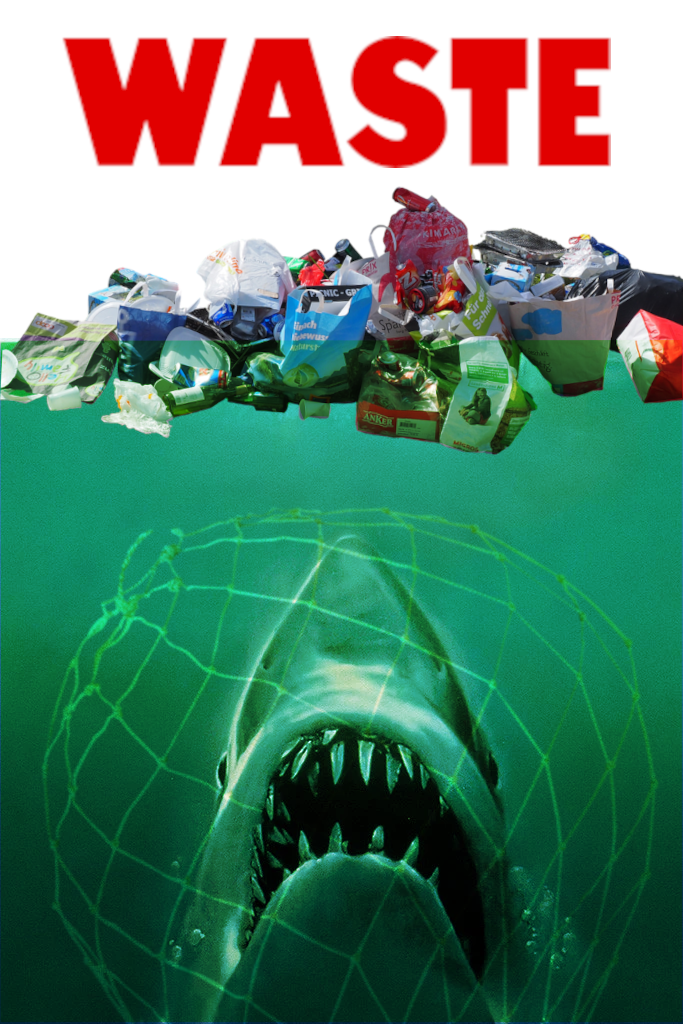
My goal in this revised version of the classic Jaws movie poster was to emphasize the real threat. The woman who is originally dwarfed by the massive great white below her is replaced by a large pile of waste and debris that rests just above the tip of the shark’s nose. It looks as though that is what the shark will be consuming rather than the woman, which may seem a lot less scary for us, but the reality is the number of people killed by sharks is minuscule when compared to the threat of plastic and other human waste on sea life.
The shark is also now missing teeth. This is representative of the fact that intimidating creatures like sharks cannot even possess a threat to us when we kill them with our carelessness and waste of resources. The toothless shark poses no threat to us, and yet we nearly kill it with our lack of regard for the environment.
I also changed the “Jaws” text to “Waste.” This is a synonym for ocean pollution, but it also implies a waste of the beauty of the ocean and ocean life. By filling the ocean with plastic, overfishing, and other harmful practices, we are wasting this beautiful and once abundant resource. A change must be made soon if we do not want to lose it entirely.
In a society that tends to be immersed in the digital world, with our phones providing the vast majority of the entertainment and news we consume over the course of a day, it becomes increasingly important that we evaluate the sources of our knowledge.
It is incredibly easy to follow a Buzzfeed thread via Snapchat and accept every celebrity gossip or political commentary piece as fact, but in order to become informed, analytical members of society we must go deeper into the facets of the media we consume.
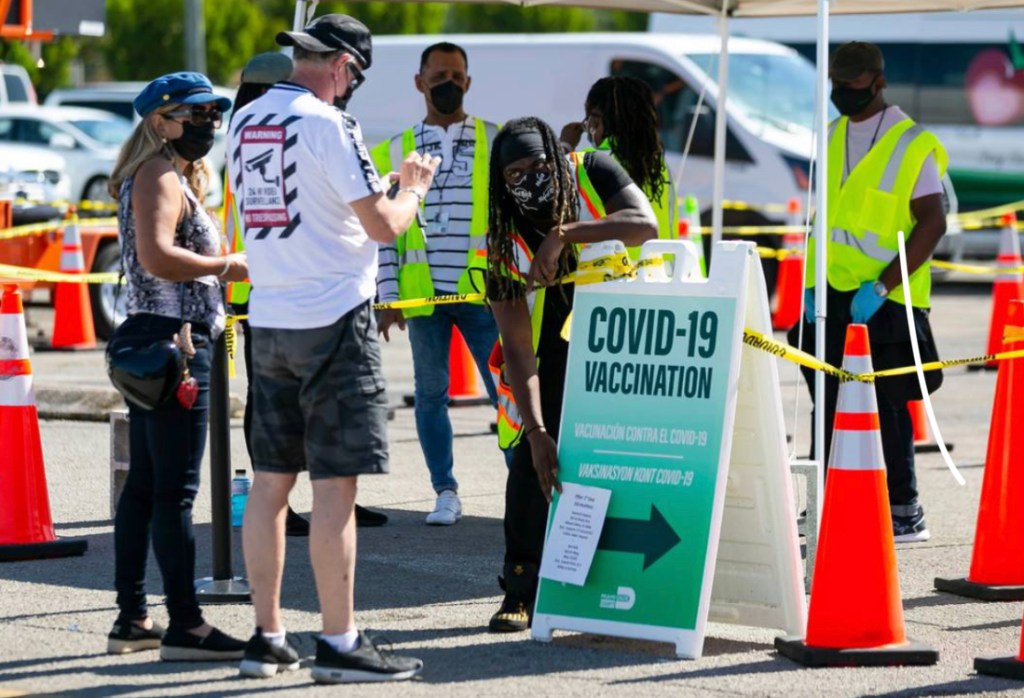
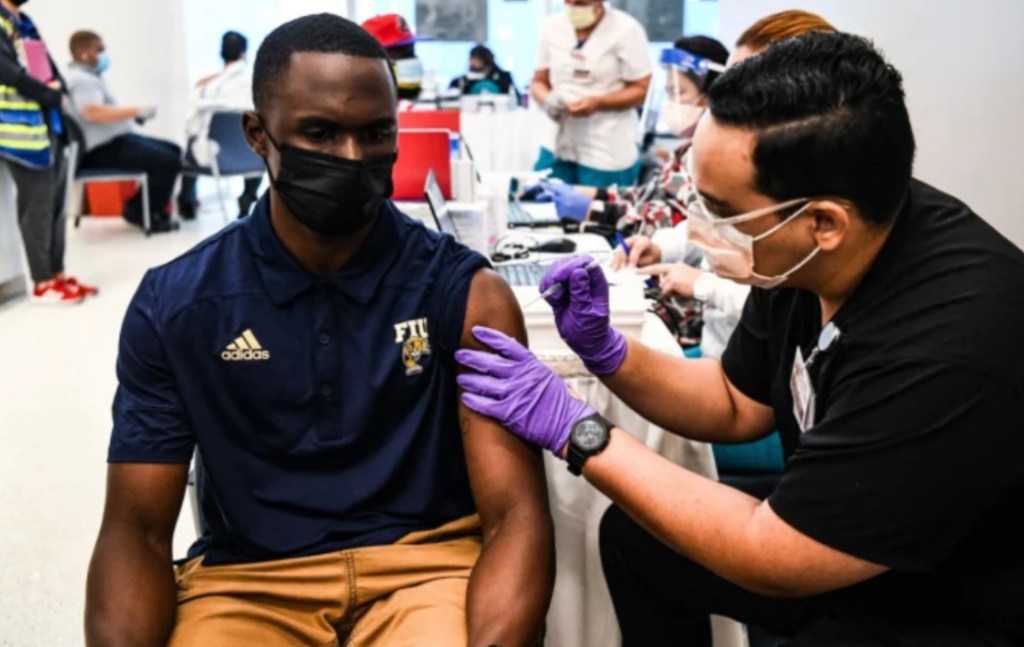
In an article entitled “What Went Wrong with the Pandemic in Florida,” the unfortunate status of the pandemic in Florida is analyzed from a variety of perspectives and attributed to a variety of causes. The national context of the pandemic narrows into a lens fixated on Florida as they discuss the methods and outcomes of the state’s COVID-19 response. One of the primary sources used within the article is Florida Governor Ron DeSantis is quoted and referenced multiple times throughout the article. His proximity to the issue is medium because there are two different ways to address his proximity, and both lend themselves to different proximities. If you look at the relevance of the pandemic to a public official in the sense that it is one of the primary issues someone holding office is forced to address in this current moment, then DeSantis’ proximity is high. If you instead choose to view his proximity to the issue as a matter of access and priority, then it would be low because as a government official DeSantis is not struggling to get access to the vaccine in the same way the article discusses. DeSantis’ independence is low because as a public official his statements are motivated and politicized to fit a certain agenda, and he is anything but impartial. His expertise is medium because while he is forced to be somewhat knowledgeable about the issues he speaks on, there are medical experts and people who devote all of their time to analyzing and studying the pandemic who know far more.
Medical experts such as Natalie E. Dean, Dr. Stephen J. Nelson, Jason Salemi, and Dr. Peter Chin-Hong who are also referenced in the article have a high proximity to the pandemic and vaccine accessibility due to their profession. Their independence would be medium as their profession allows them to have strong opinions and thoughts on how the pandemic is handled, but they are not affiliated with a predetermined political agenda or party. Their expertise, however, is high as they are professionals working in the field that deals daily with the pandemic and its repercussions.
The motivation of the article is twofold. Its primary motivation lies in the ability it has to spread awareness and educate the general public. It is a very heavy, statistically dense article that refuses to dance around the realities of the pandemic. Many people, especially in states such as Florida, have unanimously decided that the pandemic is over. This article shows through the accessibility of vaccines, hospitalization rates, and even death counts that the pandemic is very much not over. The tone of the article is stark and somber, and all of the experts that are consulted to speak on the topic reflect that tone as well.
The second motivation of this article is to act as a warning. Florida is used and examined as a case study of what not to do. Vaccine distribution and the functionality of society in light of the Delta Variant has been brutally mishandled in Florida. The concluding sentence of the article highlights the fact that what has happened in Florida could easily happen in other states if precautions are not taken to avoid this.
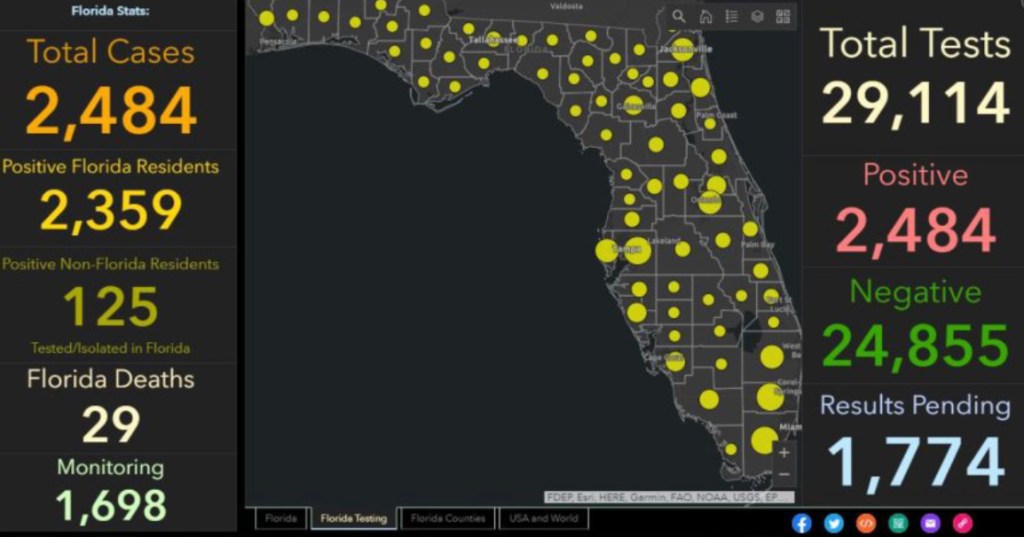
In order to highlight the severity of the pandemic in Florida, the article discusses the numbers in morgues and crematories across the state as well as the mortality rate. They also look into the percentages of people in certain age brackets who are getting sick and dying in order to identify which age ranges are able and have been getting vaccinated versus age ranges where the vaccine is lacking. The correlation between being vaccinated and getting sick and dying of the virus is what the article endeavors to identify and the statistics support this.
In addition to the raw data included in the article to support the idea that Florida has mishandled vaccinations, the quotes from medical professionals and even the Governor’s dismay at the current predicament work to paint a picture of the dire situation in Florida. It does not seem that anything is missing from the article as it is very comprehensive. If there was more data and additional claims being made, the article would be less impactful and distracting.
However, it is still interesting to consider the implications a piece of media can have while altering audience perspective and perception without being implicitly biased. As a whole, this article does a great job of covering an issue with factual evidence and relevant insight to better inform its readers.
We as a society consider ourselves the influencers of social media and the digital world, and to some extent, we are. However, the toll social media takes on our lives, and the ways it influences us in return, is just as remarkable in both constructive and destructive way…
WHY DIDN’T YOU TEXT ME BACK
Social media has many consuming properties, and it almost seems as though in order to be relevant and productive in our modern era, you must engage in and develop a vast social media presence. In just a day, I discovered my own personal reliance on it to fill those spare moments and to find and interact with nearly everyone I come across. Gone are the days where you can exclusively find someone on Instagram or Facebook. Public personas exist on Spotify, Pinterest, VSCO, Venmo, LinkedIn, Twitter, and essentially any other platform you could imagine. While many may consider this a useful facet of society, there are instances in which the obligations and pressures of being active and honing one’s presence can have negative implications.
We base the entirety of our relationships on social media at times, relationships and friendships form and dissolve depending on posts, comments, and response times. Such things force us to consider the repercussions of technology in spite of all its benefits. We take more social cues from our phones than we do the real people in our lives. I myself tried to avoid social media for the majority of high school because I saw that it was taking over the lives of my brothers and best friends, but inevitably I had been sucked into the toxic sphere of phone addiction by the end of my junior year.
It has gotten to the point where social media is no longer an option.
Social media is certainly a valuable networking tool that exposes us to a whole new realm of career opportunities and different ways of meeting people, but it is also toxic backbone of our society. We look at media through a lens of content we enjoy and assume people’s lives embody and reflect the content they produce. There is a sense of value and marketability to creating a career around social media influencing, but this culture we have created also breeds intense pressure in regards to our personal lives. When engaging in the influencer culture, one is presented with a certain set of expectations and pressures in order to keep up and maintain a sense of relevance…
There have been days where I have been intentional on not once responding to a single text or call or even engaging on social media and the consequences have been quite intriguing to look at. Text messages from friends and family members, classmates and instructors, all suggested that they either assumed something terrible had happened to me or that I was in an emotionally unstable place. We cannot step away from the digital world and seamlessly step back in at will. There are consequences for what we choose not to have on social media just as there are consequences for what we do put out there for the world to see.